For residents, their families, and the teams who care for them, a move-out can feel sudden. One week a resident is settled into her routine, eating lunch with friends and walking to activities on her own. A few weeks later, she needs help getting dressed and someone beside her on the walk to lunch. Then she falls in her room one evening, and soon her family is weighing what comes next. Looking back, it's easy to point to the fall as the turning point.
But is that really where it started? The data suggests the story begins much earlier.
We looked at 12 months of move-outs across 236 communities using August Health and found that while falls were part of the story—with 45% of move-outs preceded by one in the prior 90 days—for many residents, the real change was already underway.
When care needs start to climb
Among residents whose move-out followed a fall, care needs were often already climbing. Three to six months before the fall, 24% had a change in care level. In the 90 days just before the fall, that share jumped to 54%.
The fall, in other words, was often one step in a broader decline rather than the start of one. And it was rarely the last: many residents fell again or had another incident soon after, and when a fall came before a move-out, the move typically followed within three to four weeks.
The challenge is that each of those events lives in the record as its own incident, documented by a different person on a different shift. The caregivers and nurses who know residents best see each one as it happens, but connecting them into a pattern by hand takes time few teams have, so it often happens after the fact.
Getting ahead of the bigger questions, like whether this is still the right setting for a resident and what their care goals are now, means seeing those connections sooner.
Bringing the pattern into view
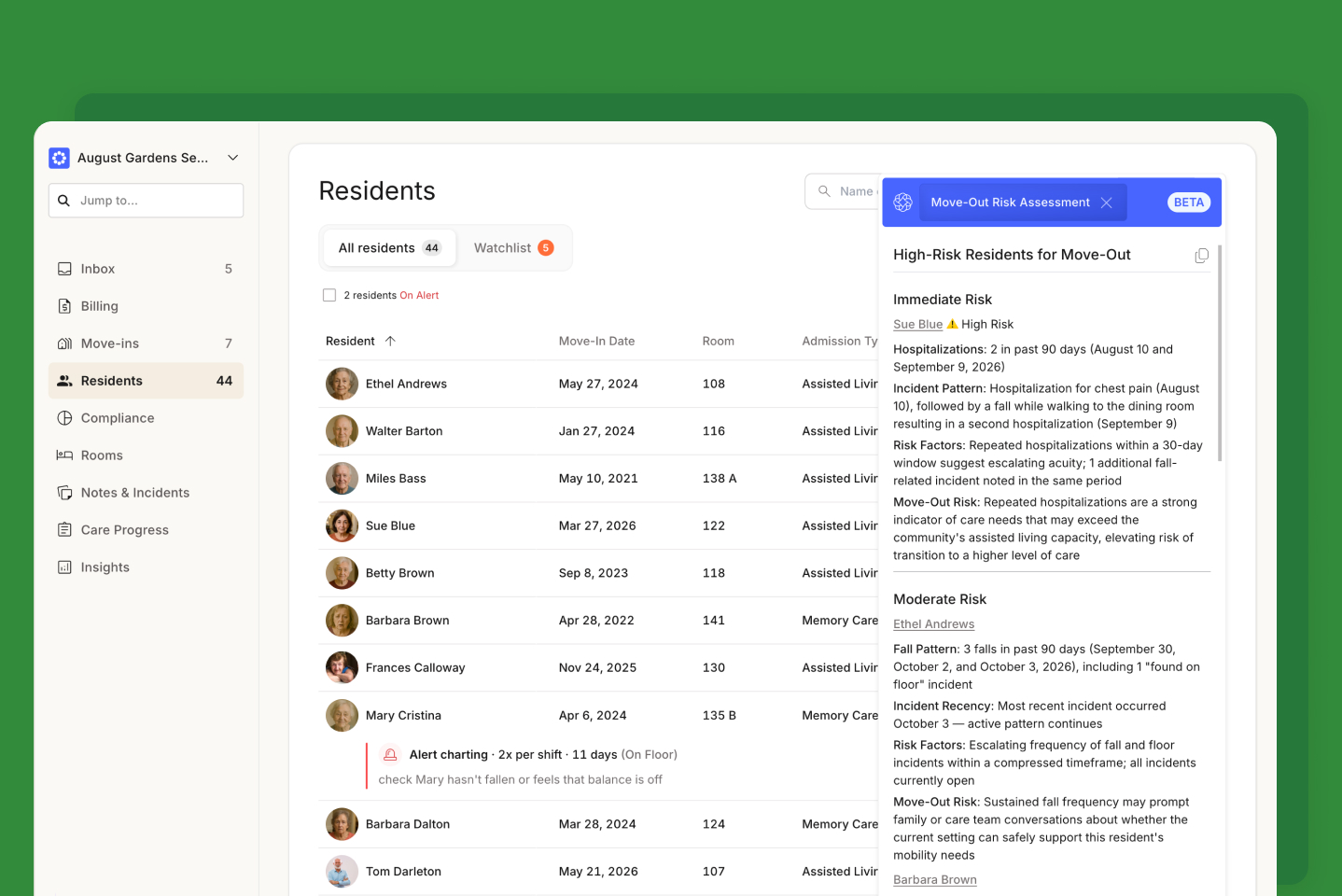
The Move-Out Risk Assessment uses August Intelligence to draw on the information your team already documents in August Health—from care-level changes and hospice status to falls, ER visits, hospitalizations, and other incidents—giving clinical leaders a single view of how each resident's needs are changing.
It also assesses each resident's risk of moving out based on several factors:
- Immediate: the highest care level, hospice care, or repeated hospital stays
- Moderate: repeated falls, several recent incidents, or a recent ER visit
- Lower: a recent fall or incident worth watching
Each resident also comes with an AI-generated summary of what's driving that risk.
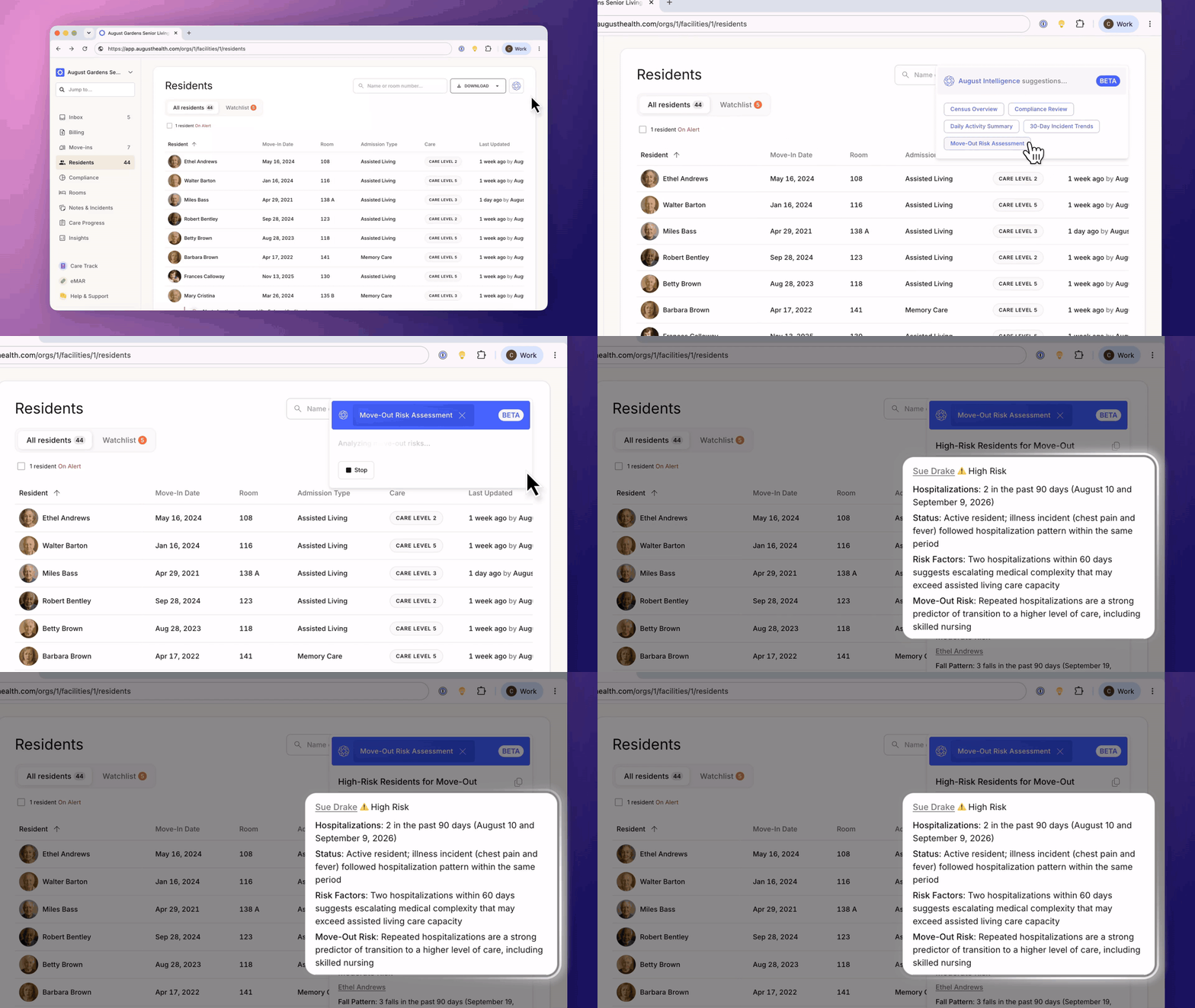
Those risk groups not only help clinical teams know where to focus next, but also shape how teams talk with families, so changes are shared as they unfold rather than after a crisis forces the conversation.
A resident at lower risk might prompt a check-in call about what happened and what the team is watching. At moderate risk, it may be time to review the care plan and be candid that if things keep changing, the family should be ready to talk about next steps. At immediate risk, the conversation about more support, whether here or somewhere with more clinical care, becomes a priority.
At scale, these same signals can reveal something bigger. Patterns in rising acuity and move-out risk can provide an earlier indication of where care needs, staffing demands, and occupancy may be heading—giving leaders more time to plan and adjust before those shifts are reflected in community performance.
The Move-Out Risk Assessment doesn't decide what happens next. Clinical teams know how to respond when a resident's needs are changing. What it changes is when they see it.
Time to decide together
A fall may be the moment everyone remembers, but it's rarely the whole story. When clinical leaders can see the signs as they build, there's more opportunity to adjust care plans and speak with family members before any decisions become urgent.
Every community wants to support residents in the place they call home for as long as possible. But part of that support is recognizing when it's no longer the right setting for a resident. If a move is the right next step, it's one that community leaders and families can make together.
For a resident settled into their routine, and the family who wants them there as long as it's right, those conversations matter.
Explore how August Intelligence helps communities see what's changing and act sooner.