Senior living knows how to make a great first impression. Communities invest heavily in beautiful spaces, thoughtful tours, compelling marketing, and hospitality-driven sales experiences. But once a prospective resident says yes, the experience changes hands. A community that spent months and real budget getting someone through the door can't afford to lose them to a paperwork gap.
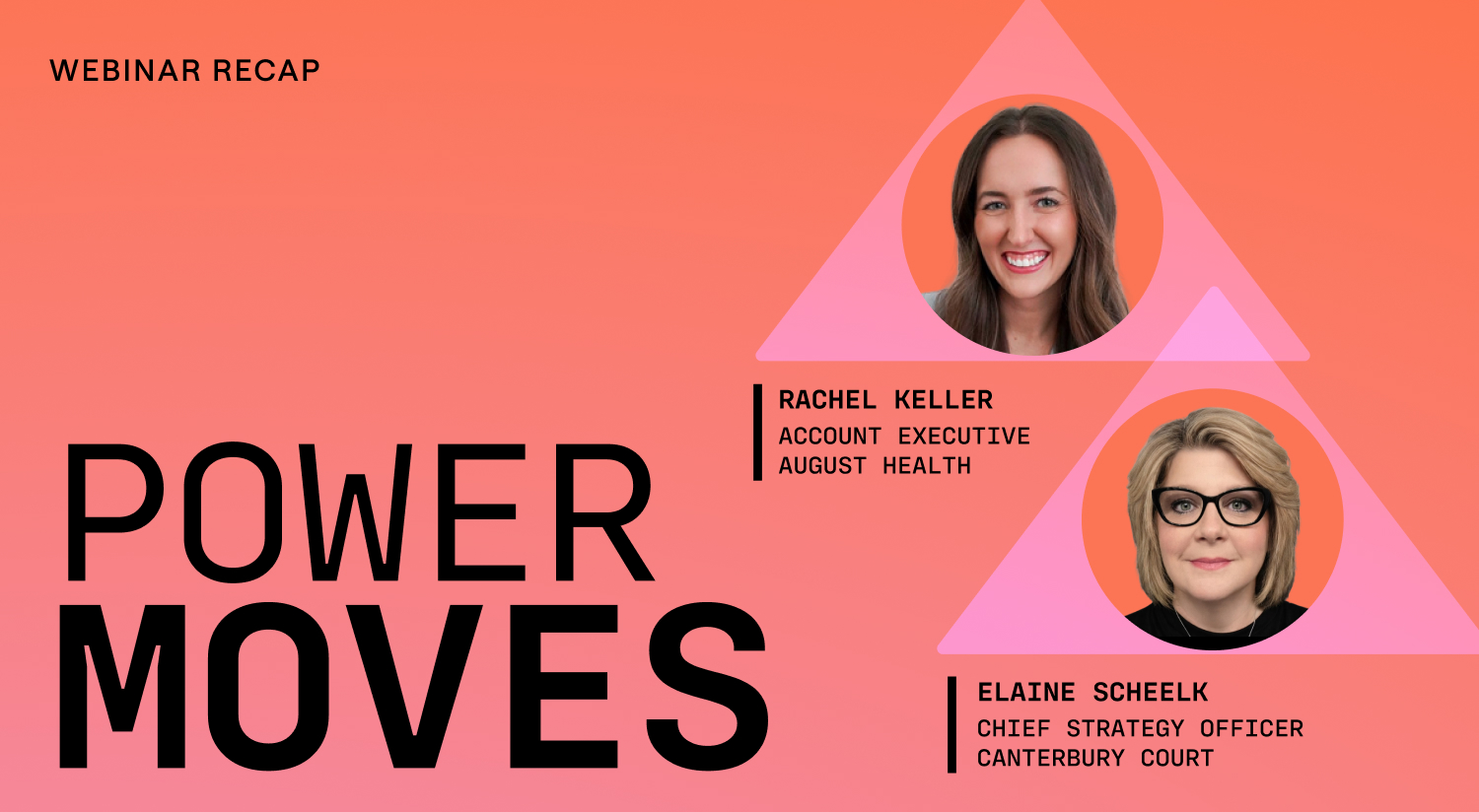
"We have a group of savvy seniors who are moving in. They're shopping online. They have decisions that they've already made before they walk through our doors," noted Elaine Scheelk, Chief Strategy Officer at Canterbury Court, during August Health's recent Power Moves virtual webinar, The Promise Gap. Her question gets at something every senior living operator should be asking: does the experience we promise before move-in match the experience we actually deliver?
To dig into that gap, the conversation looked outside senior living, at three brands that have spent decades building remarkable customer experiences: Chick-fil-A, United Airlines, and Disney. The industries have nothing in common with senior living. What they share is this: great experiences aren't built on one big gesture, they're built by designing the operational details around the person living through them.
Predictability builds trust
Chick-fil-A has grown 15% year over year for seven straight years, while McDonald's sits at 2%. According to Scott Wozniak, former organizational effectiveness consultant at Chick-fil-A, the difference isn't the chicken–it's operational excellence. A long line at most drive-thrus means turn around and leave. A long line at Chick-fil-A doesn't scare people off, because they trust that it will move quickly.
"I think similar to the Chick-fil-A drive-thru, one of the things that I love about their process is it is predictable and it's consistent," Scheelk said. "Is our process as consistent and predictable from saying yes to a unit to the move-in?"
Her answer, at Canterbury Court, is a single point of contact who carries a resident through the whole process. "I think nine to ten times, the gap of process is where the trust breaks down." That gap shows up in small, avoidable ways: a family doesn't know when someone will call, when selections need to be made, or who to ask when something's unclear.
It also shows up in smaller assumptions: how a resident wants to be reached, how often, whether they want company right away or time to settle in first. Canterbury Court asks instead of assuming. "I think that choice is everything," said Scheelk.
Small breakdowns become bigger than they are
At McDonald’s, the McFlurry machine is only broken about 20% of the time. But ask anyone what they associate with it, and the answer is almost always "broken." People don't remember the percentage of time something worked–they remember the pattern.
Move-ins have their own version of this: an outdated logo on paperwork, conflicting information across two documents, a copy of a copy that looks sloppy. Paperwork is often the first place a community either keeps or breaks its promise. None of it is catastrophic on its own, but put together, feels like a broken ice cream machine. Nothing has actually failed, there’s just a pattern that says it has. "You just can't build trust part of the time," Scheelk said. "Even the best built system or process is going to have breakdowns at certain times."
What matters more than preventing every breakdown is how fast the team recovers from one. "It's okay to have an apology call," said Scheelk. "I'm so sorry, this didn't happen for you, and we'd like to make it right." In other words, own it, fix it, and move forward. move forward. "Trust can be restored by you taking the step of ownership."
Don't wait for families to find the problem
United's number one predictor of customer satisfaction is on-time flights, according to David Kinzelman, Chief Customer Officer and Senior Vice President of Airport Operations at United Airlines. So the airline built a tool called Connection Saver to flag a late arrival and alert gates and crews before a passenger starts to worry. The lesson isn't the technology. It's the instinct to solve a problem before the customer experiences it as one.
Not every move-in needs the same amount of attention. "You're going to have some of those easy move-ins, the people who have no connecting flight," Scheelk said, "and then you're going to have some of those where it is a mad dash to the finish line." Both are normal. What matters is knowing early which one a family is in, and making sure environmental services, sales, resident services, and leadership all know it too.
United's proactive instinct doesn't stop at technology. Scheelk saw it firsthand on a delayed flight, when the crew asked passengers without a tight connection to let the twenty-three people who had one deplane first. "There was a synergy that was built on that flight," she said. "I think the same is true with our teams. Sometimes it might mean that one of those teams is taking a seat and letting the others lead."
For the families who need more than a standard process, that same care shows up as a question Scheelk asks her own team: "How do we offer a warm embrace to someone who's coming through a move-in process that might be really difficult?"
Details matter, and asking matters more
Disney's philosophy, according to Lee Cockrell, retired EVP of Operations at Walt Disney World, is that no detail is an accident–and it’s likely the reason an estimated 70% of park guests return. Scheelk's favorite example wasn't a ride or a parade, it was the parking lot. Valets track what time a car pulls in, so when a family returns, staff can greet them by name and ask about their day, picking up the thread from last time. It's a detail that says someone noticed who they actually are.
Senior living is, at its core, about people–knowing who they are and their preferences. So something as small as how a resident signs their paperwork is a detail worth getting right. "If you're not e-signing in this day and age, please, please get to that point. We have tech-savvy seniors who expect that," Scheelk said. But going digital isn't the point on its own. What matters is not assuming. Give people a choice. Assume paper, and you've assumed a no. Assume digital, and you might have too. "How do people prefer to do their signing? That to me is a big key."
Replace "no" with "yes, if"
Disney also runs on something Cockrell traces back to the 1940s: a "yes, if" mindset. Instead of asking whether something's possible, ask what would make it possible. A resident tight on finances isn't automatically a no. It might be a yes, if a family member covers the entrance fee, or a yes, if a move-in incentive offsets the monthly cost for the first several months.
Scheelk pushed the same mindset into operations, arguing that vacant units aren't automatically a bottleneck, either. "What would it look like if you have ten units that are sitting vacant, not move-in ready? Maybe it's bringing an outside contractor in to get the job done quickly so that you can say yes."
Where to start
"Every individual moving in is just that, they're an individual and they're unique," said Scheelk. That doesn't mean abandoning a standardized process. It means holding the process steady while staying willing to curate it for the person in front of you.
A few places to start:
- Audit your ice cream machine moments. Find the small, recurring things that quietly erode trust.
- Create one memorable moment per move-in. It doesn't need a budget, it just needs to be intentional.
- Map the anxiety points, and communicate the timeline before a family has to ask.
- Give residents agency. Ask how they want to communicate, sign documents, and be contacted, instead of assuming.
- Look for "yes, if" opportunities. When something seems impossible, ask what would make it possible.
A great move-in isn't about creating one perfect experience for everyone. It's about building a process that is consistent enough to create confidence and flexible enough to feel personal. Because the best move-in experience isn't the one where everything goes perfectly. It's the one where the resident and family can look back and think: They thought of everything.
Watch the full conversation with Elaine Scheelk, Chief Strategy Officer at Canterbury Court, below.
Join us for the next Power Moves event!
Power Moves is a virtual event series for senior living Sales & Marketing professionals. Join us for our next session The Great Debate: Front Door vs. Back Door. In partnership with WelcomeHome, we’ll discuss what drives success in senior living–new move-ins or retaining residents longer. You’ll walk away with a tested decision-making framework you can defend to your board, align your sales and marketing teams around, and use to compete in your market.
Avoid the Promise Gap with August Health Move-Ins
August Health Move-Ins replaces the one-inch paper binder with a fully digital move-in: pre-populated documents, remote e-signatures, and real-time visibility into where every family stands in the process. Cut document prep time by 75% and speed up move-ins by an average of four days.