A resident was standing at the front desk of her Koelsch community, repeatedly asking to call her family. She was becoming frustrated and the receptionist was struggling to reassure her.
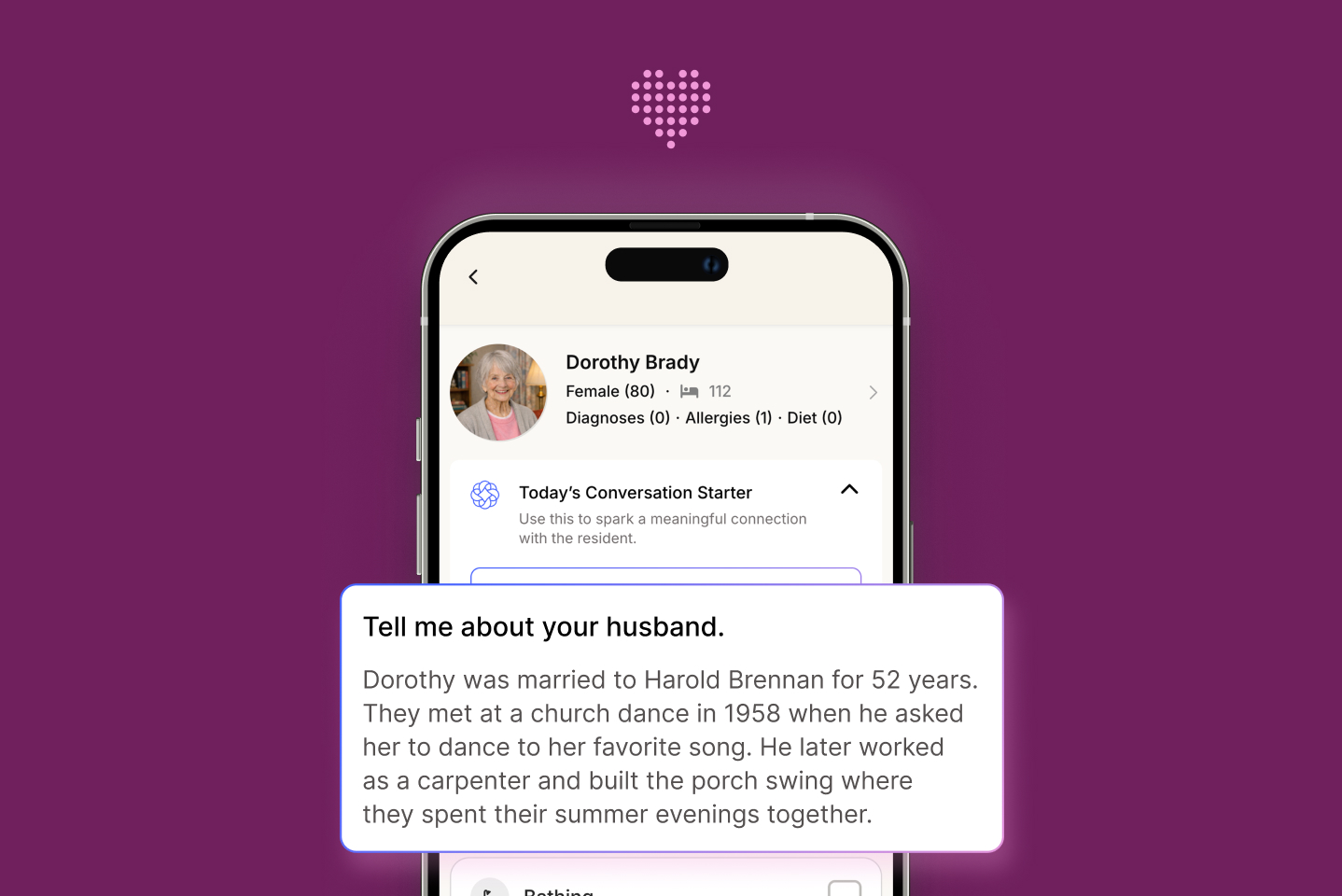
Wanting to redirect the situation, Kayleen August, RN and Regional Nurse at Koelsch Communities, opened August Health Care Track and pulled up that resident’s Conversation Starter: a simple question generated based on the personal details a community already knows about the resident. In this case, it recommended asking about her husband.
The change was immediate.
Suddenly, the resident began talking about how tall, strong, and handsome he was. What had been an anxious exchange became an easy, natural conversation. Afterward, the resident calmly left the front desk and found a place to sit.
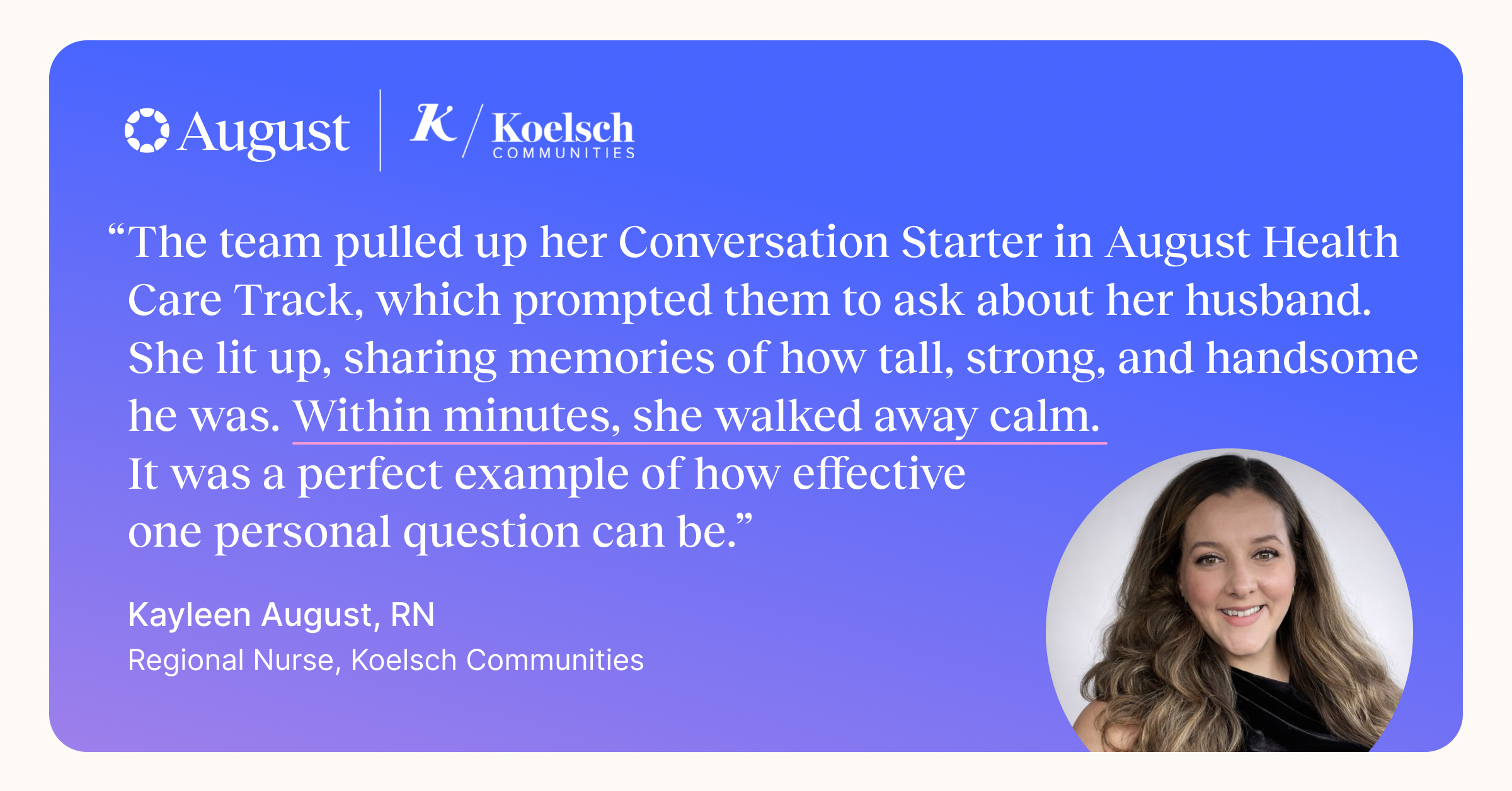
“We were able to redirect her anxiety with a simple question,” shared August. “And we didn’t have to go looking for it. It was right there in Care Track when the team needed it.”
It was a small moment, but it was the type of moment that the resident experience is built on.
Connection is core to care
People move into senior living for many reasons: changing care needs, safety concerns, the loss of a spouse, or increasing difficulty managing at home. But the promise of a community is not simply that medications will be administered correctly or care will arrive on schedule. It’s that residents will continue to experience belonging, purpose, dignity, and human connection.
Research suggests senior living communities are delivering on that promise. According to a U.S. News survey, 61% of older adults said their feelings of loneliness or isolation improved after moving into a senior living community. That is meaningful progress, but also underscores that living in a community is not, by itself, the same as feeling connected. A person can be surrounded by other people and still feel unknown.
Before moving into a community, residents have spent an entire lifetime building familiarity with a home, a neighborhood, a routine, and the people around them. Even a welcome move asks them to rebuild some of that familiarity in a new place, with new people.
At the same time, they are now relying on other people to help them with tasks such as bathing, grooming, dressing, and toileting, a vulnerable feeling for those who were once fully independent.
Connection changes how that care feels. When a caregiver knows something about your life, remembers your family, or understands what puts you at ease, the interaction can feel less like completing a task and more like being cared for.
That is part of what person-centered care asks communities to do: understand not only what assistance a resident needs, but who they are as a person. Those relationships take time to build. But every caregiver needs somewhere to begin.
A personal question, right when it is needed
Most communities already collect a tremendous amount of information about their residents. It appears in assessments, service plans, progress notes, life stories shared at move-in, family conversations, and the observations caregivers document throughout the day.
Some of it is clinical: fall risk, mobility, medication needs, or a change in appetite. But a lot of it is deeply personal: the music someone enjoys, how they met their spouse, what makes them anxious, or how they prefer to begin their morning.
This information typically exists somewhere in the community. The opportunity for technology is to turn it into something they can use in the moment they need it.
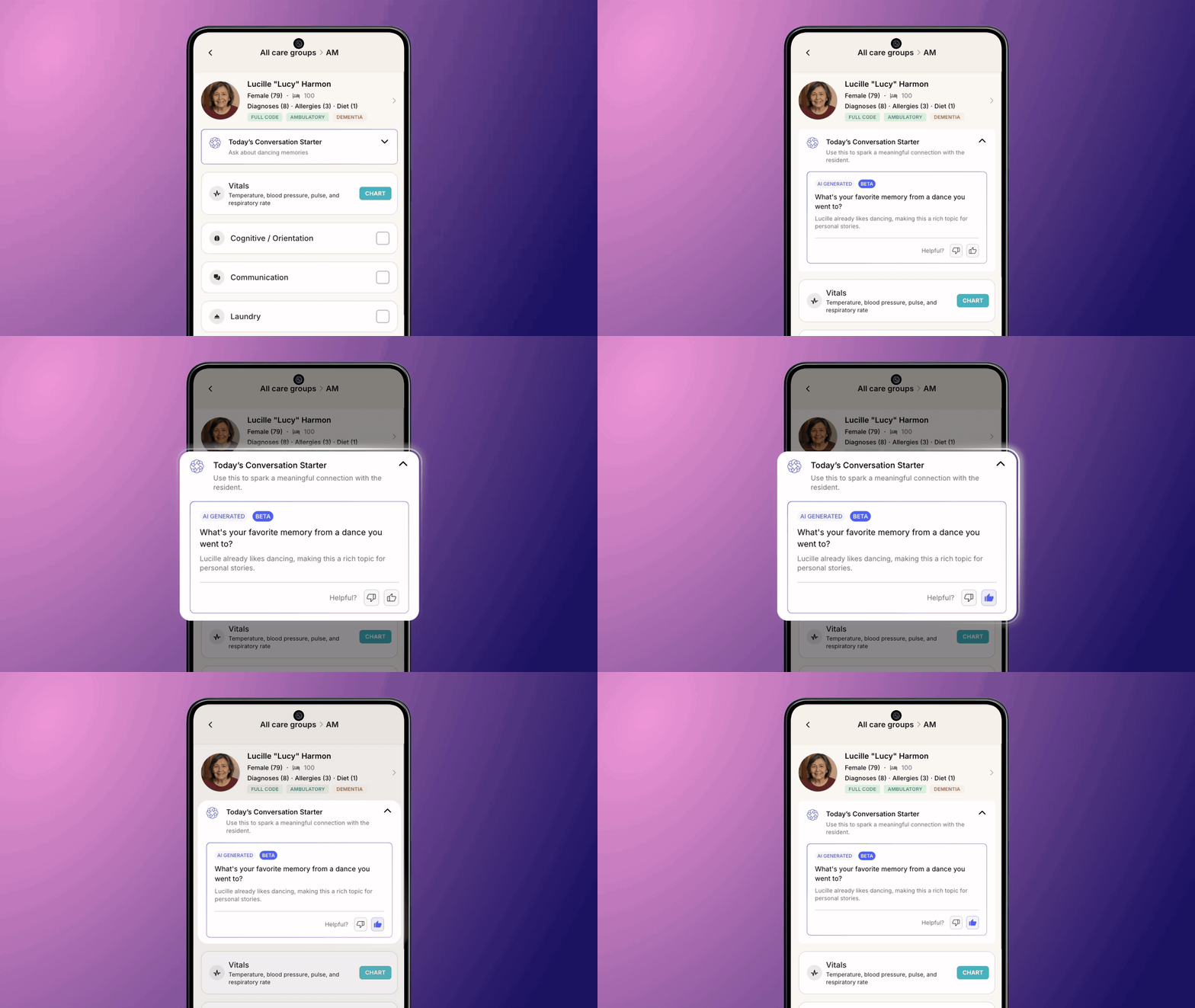
This is what Conversation Starters helps communities achieve. August Intelligence uses the information communities capture within the August Health platform to generate a question grounded in who that person is, including their history, hometown, family, interests and experiences. A new question appears in Care Track during every shift, meaning the opportunity for connection is delivered right when it’s needed, at the point of care.
These are not generic icebreakers meant to fill silence. They’re rooted in what the community already knows about that resident, giving caregiving teams a genuine, personalized way to get to know a resident a little better, help put them at ease, and turn every day care into a moment of connection.
The power of something personal
Conversation Starters doesn’t give teams a rigid script to force a conversation. Instead, it gives them a starting point—something real about who that resident is, right when it’s needed.
That day at the front desk, the prompt got the conversation going, but it’s what the team did next that made the difference. “She shared more things about him, which led staff to continue asking questions," noted August. “It was a perfect example of how effective one personal question can be.”
The resident didn’t leave the situation feeling managed or appeased. Instead, she walked away feeling calm, and best of all, known.