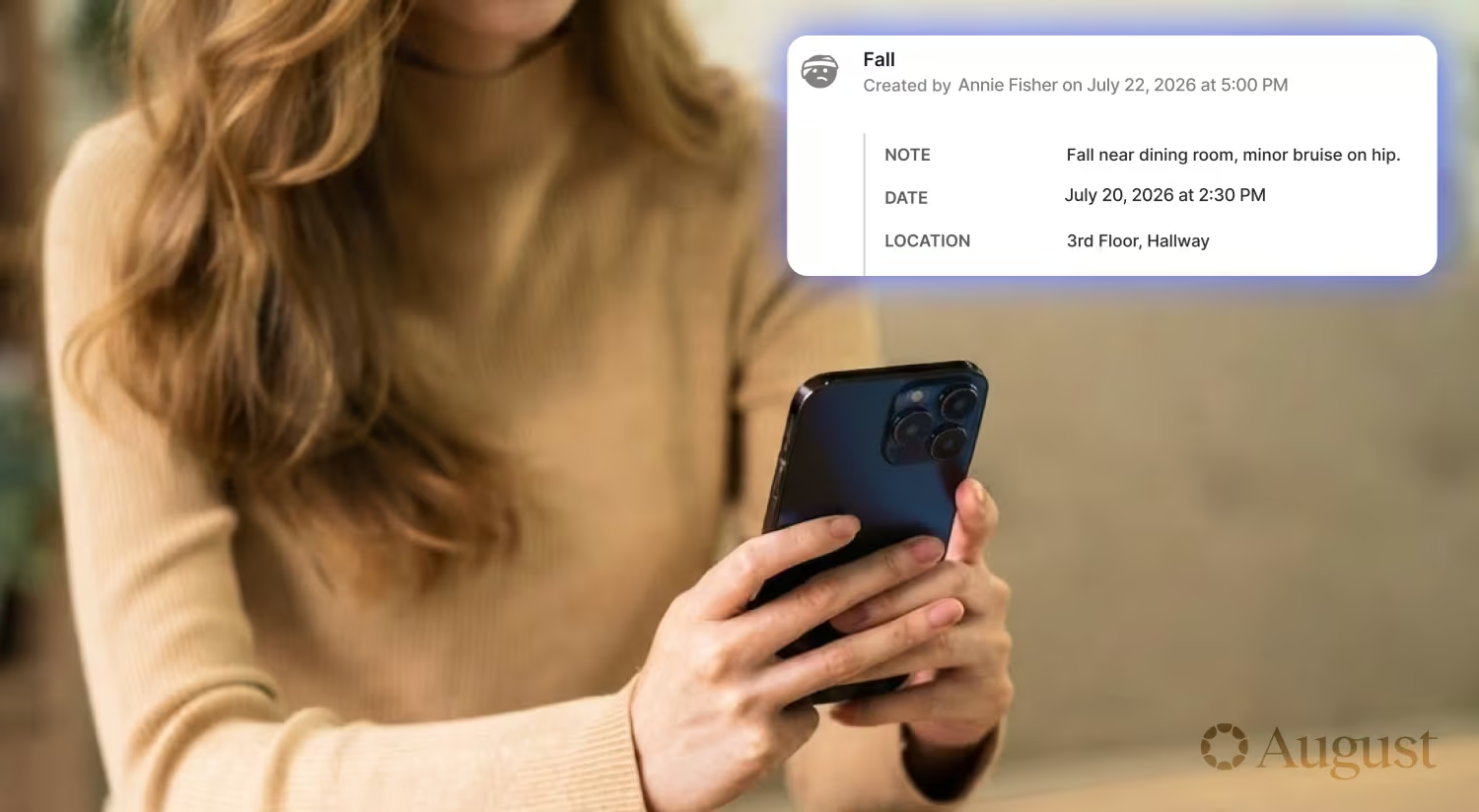
One Sunday afternoon, Gloria Hughes, Chief Operating Officer at Innovation Senior Living, was at a restaurant after church when her phone buzzed. A resident at one of her communities had fallen and was placed on alert.
The notification from August Health included more details. The resident had struck her head, was complaining of pain in her right hip, and was refusing transport to the emergency department.
To a caregiver on the floor, that refusal represented a resident exercising her right to decline care. To Hughes—a nurse with more than 25 years of experience—the combination of a head strike and localized hip pain told a different story. "This is a little bit more than just a regular fall," Hughes said. "This is serious."
Hughes immediately called the community's Wellness Director and urged her to call 911, hoping they could convince the resident to be evaluated. The intervention worked. "We got her out of the building into the ED and she had a fractured hip and she also had a bleed," Hughes said.
What makes that story remarkable isn't the fall itself. It's that the person who changed the outcome wasn't in the building. She wasn't assessing the resident in person or responding to an emergency call. She was reviewing an alert on her phone from a restaurant after church.
The challenge of distance
Senior living organizations have always relied on experienced leaders. Regional wellness directors, vice presidents of clinical services, and seasoned operators have spent decades caring for older adults. They've seen thousands of falls, medication changes, hospitalizations, and subtle changes in condition. Over time, they develop something that's difficult to teach: the ability to recognize patterns.
"I don't know everything," Hughes said. "But what I do have is experience." That experience has always been one of an organization's greatest assets. The problem is that experience has traditionally been limited by geography.
Regional leaders can only visit so many communities in a week. By the time an incident report reaches corporate leadership, the opportunity to influence the outcome has often already passed. Site visits, audits, and monthly reports are valuable, but they're inherently retrospective.
As resident acuity has increased and operators have been asked to support more communities with leaner teams, that model has become increasingly difficult to sustain. Communities don't just need oversight after the fact. They need access to that experience while decisions are still being made.
Bringing experience to the floor
As new technologies entered the market, many in the industry found themselves lost in systems built for hospitals or post-acute care. "I have utilized systems that were not built for assisted living, but for skilled nursing," said Hughes. "And that was always quite interesting."
The data she wanted existed somewhere in those systems. But getting to it meant working with a solution that was adapted for senior living–not designed around the realities of today’s communities.
That changed when Innovation Senior Living was introduced to August Health, a platform designed specifically for the senior living industry. “I can know in real time what's happening on my properties,” notes Hughes. “I could be on the other side of the coast and know what's happening on the other side of the coast in my communities, and be able to go into that record very quickly and give feedback on what could be the next step."
That doesn't mean regional leaders become involved in every incident. In fact, Hughes argues the opposite. Real-time visibility allows experienced leaders to focus on the relatively small number of situations where their perspective can make the biggest difference.
From reviewing the past to shaping the present
The same principle extends far beyond emergencies. Hughes regularly reviews Watch Lists within August Health that highlight residents experiencing weight loss, multiple falls, or other meaningful changes in condition. "I can pull up that watch list and say, look, Mr. Brown, he's lost weight last month and this month. We need to figure out what's going on," she said.
Instead of combing through hundreds of resident records looking for trends, clinical leaders can focus their attention where it's needed most. Is a medication affecting appetite? Have they fallen into a depression? Is it time for another assessment?
Those conversations happen before a resident experiences a crisis—not after. "It's being able to look at those residents and make decisions that can be proactive in their care," Hughes said. The regional leader's role becomes less about reconstructing events and more about helping communities respond before problems escalate.
Supporting communities, not supervising them
One concern with greater visibility is that it creates another layer of oversight. Hughes sees it differently. She describes regional leadership as another source of support for executive directors and wellness leaders—not someone looking over their shoulder, but someone they can lean on.
"I think the executive directors, the wellness directors, and the regional teams are grateful for that instant feedback," she said.
When a difficult situation arises, decades of experience become available almost immediately. That experience doesn't replace the knowledge of the caregivers in the building. It complements it. The people closest to the resident still provide the care. Regional leaders simply have the opportunity to contribute while that care is unfolding instead of reviewing it days later.
The power of connection
Hughes is quick to point out that technology didn't make the clinical decision that Sunday afternoon. Her years as a nurse did.
"Technology in healthcare is never gonna take away that personal decision making," she said. "That personal touch. But when you have a program like August Health that can give you the facts right away and help you along in those decisions, there's nothing better."
The resident still needed caregivers to respond to her fall. She needed a Wellness Director to coordinate care. She needed emergency responders and physicians to diagnose and treat her injuries. Technology didn’t replace that. What it did do was remove one of the biggest barriers to sharing experience across an organization: distance.
The future of regional leadership isn't about being in more places at once. It's about making sure that decades of experience can reach any community, wherever—and whenever—it's needed most.