With our 2026 State of Senior Living Clinical Leadership Survey now open, I thought I’d re-visit a few of the past findings, as well as prior findings from other research I’ve conducted over the past few years.
------
I've asked hundreds of nurses this question: How do you know you've had a good shift?
As a nurse who thinks a lot about how technology can support clinical care, I find their answers illuminating. They reveal both the underlying complexity of our work, and the great number of opportunities there are to make shifts better.
Three kinds of "good"
The first kind of answer is quantifiable: Did the meds get passed? Vitals taken? ADLs completed and charted? This is the easiest kind of success to measure, because you can count it, stack it, compare it. It shows up well on a dashboard and it's what most communities mean when they talk about "compliance."
The second kind of answer is harder to count but just as real. "My team worked well together." "My manager has my back." "Mrs. D didn't yell at me today for being late with her meds." These are the moments that make a shift feel like it went well, not just that it got done.
The third kind of answer is the one nurses tend to laugh about, in that particular dark-humor way nurses have. "I didn't feel completely exhausted." "I actually had time to go to the bathroom." These are things I’ve said in my nursing career and things we can’t help but laugh at because it’s absurd to think of a basic human need as a “win”. But they are a sign to us that something went right. The system worked that day.
The loop underneath it all
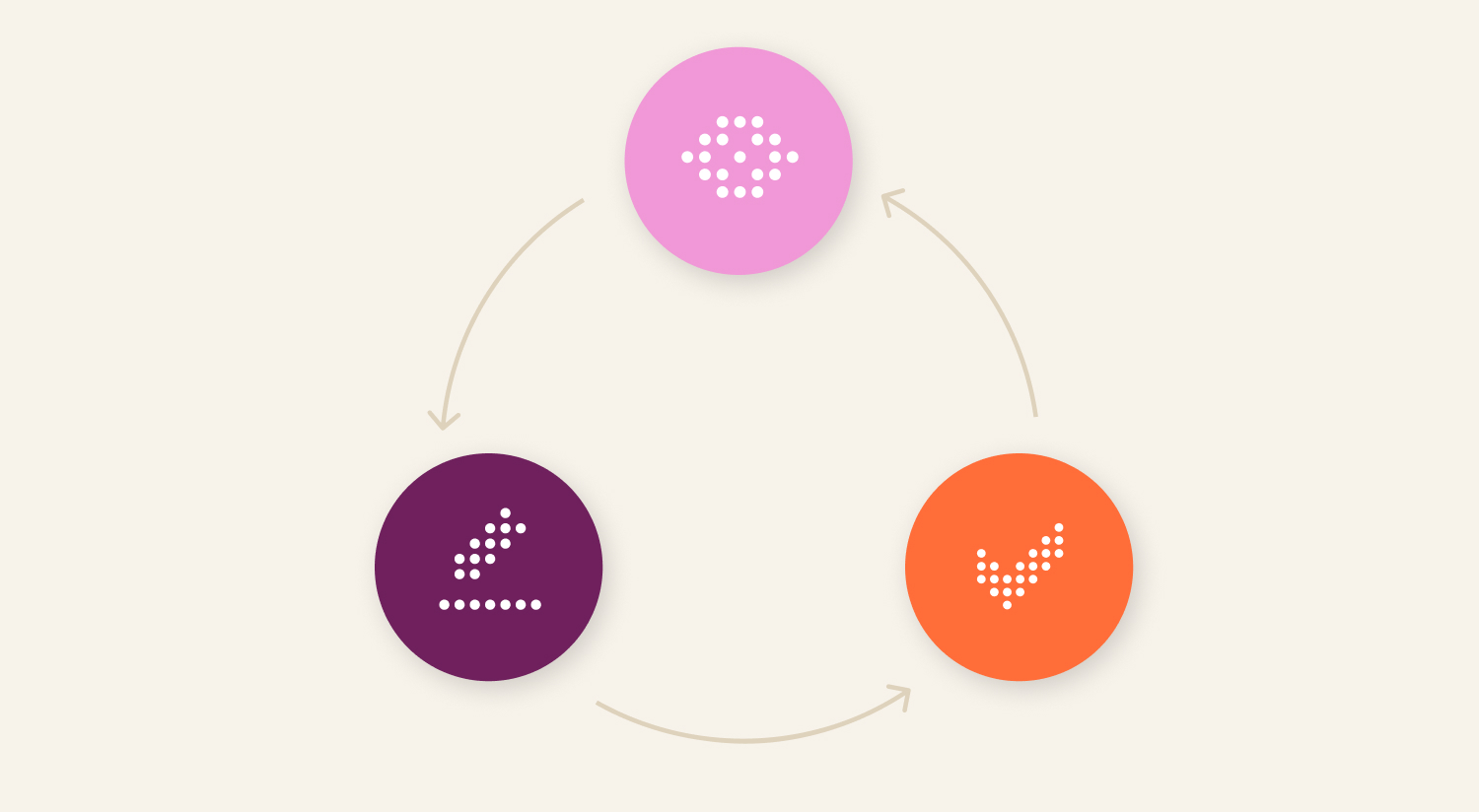
Whether a nurse is thinking about medication passes, teamwork, or just making it to the bathroom, the actual work of the shift runs on the same loop, over and over, thousands of times a day: Notice. Act. Communicate.
You notice something: A change in a resident, a cue that something's different than yesterday. You turn that observation into a decision: give the medication, call the doctor, watch and reassess. Then you communicate what you did and why, to the next shift, to the family, to the chart, sometimes to 911. And then it starts again, with the next resident, the next room, the next hour.
When a shift goes well, it’s usually because this loop ran smoothly. When a shift feels bad, it’s almost always because the loop broke down. You didn’t notice something in time, you couldn’t act fast enough, or the communication got lost. Sometimes, others didn’t notice a change in time, the pharmacy delivery didn’t arrive on time, or the doctor’s office hasn’t called back yet.
Where the loop breaks
Documentation is what helps this loop stay intact or disconnect completely. According to the 2025 State of Senior Living Clinical Leadership Survey, we learned about a quarter of communities still rely at least partly on paper charting. Paper charting is a one way interaction, requiring the nurse or caregiver to remember to document what they did. Gaps are easy to accumulate, and harder to see. Which means that information that wasn’t communicated, never makes it through the loop into the “Notice” step for anyone else on the team.
Change of condition is another example. This survey also revealed that 81% of communities communicate a change in resident condition using a verbal report or a team meeting. A verbal report at shift change is a real communication, but it's a fragile one. None of this means nurses are dropping the ball. It means the loop, Notice, Act, Communicate, is only as strong as the process and tools to keep it running.
Modern technology strengthens the loop
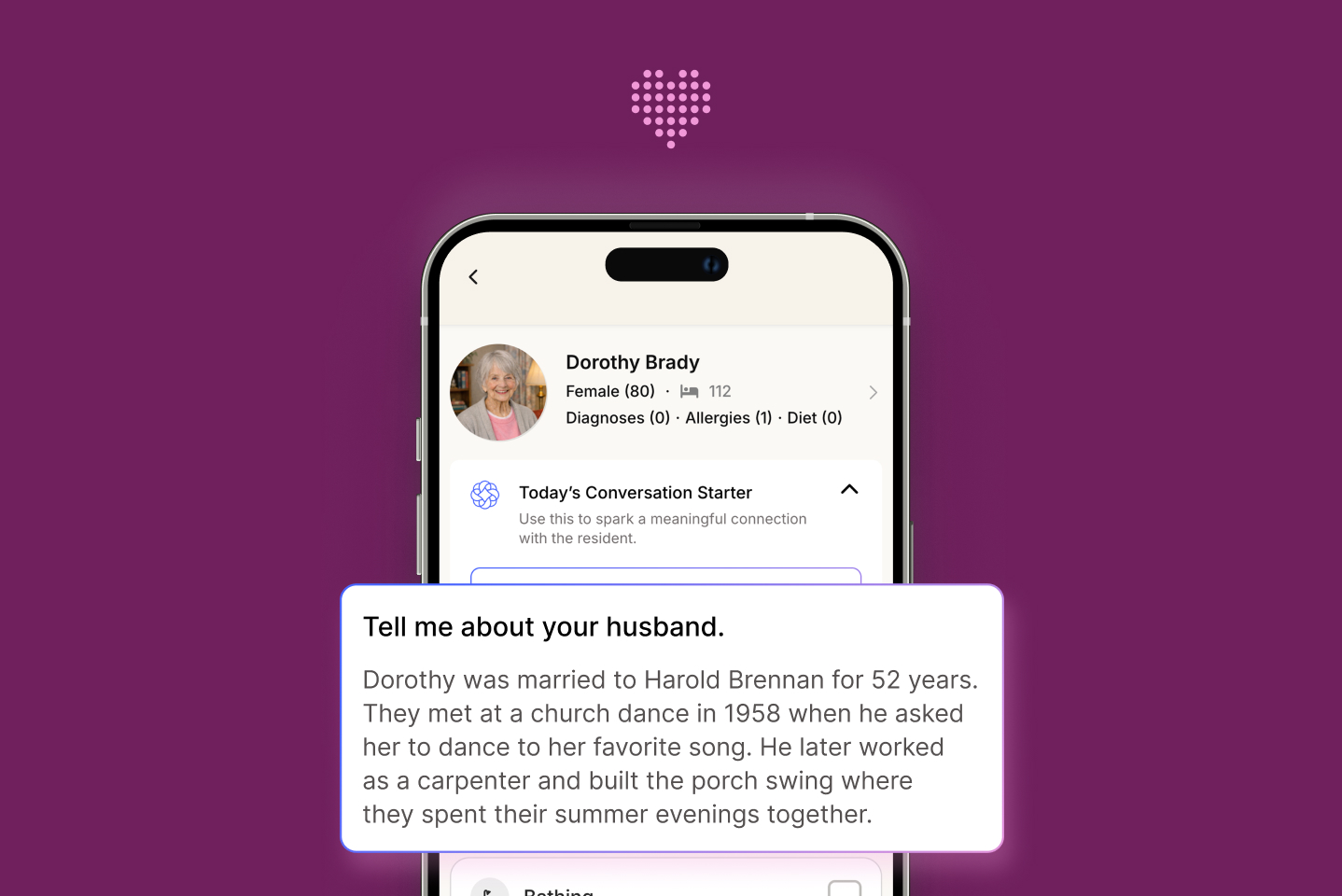
The ultimate test for any senior living technology for nurses and caregivers is simple: Does it strengthen the Notice-Act-Communicate loop, or does it just add another screen to check?
A documentation system that lets a caregiver flag a change the moment it happens, instead of waiting to remember it at shift change, is strengthening Notice. An alert that routes straight to the nurse who needs to act on it, instead of sitting in a report nobody opens, is strengthening Act. A record that's accurate and available to support conversations with families, or delivers the right information to the next shift is strengthening Communicate. Technology designed with nurses and for nursing workflow makes the loop stronger,and that contributes to a better shift.
Measuring what matters
When technology strengthens the loop, it redefines the way we measure success. Better, nuanced reporting. Well-constructed and tested AI prompts. The ability to surface connections between disparate data points, giving nurses the information and insights needed at the right time and place in their normal workflows, making it easier to Notice, Act & Communicate. Because clinical and operational excellence isn’t just about the percentage of tasks completed that day. It’s about ensuring nurses have the clarity, time, and support they need to provide exceptional care without sacrificing their own well being.
Once again, August Health is partnering with ASHA to explore these themes and more in the 2026 State of Senior Living Clinical Leadership Survey. Now in its third year, it's the only industry benchmark built around the perspective of clinical leaders.
Share your experiences as a clinical leader in senior care! Click here to complete this 10-minute survey.