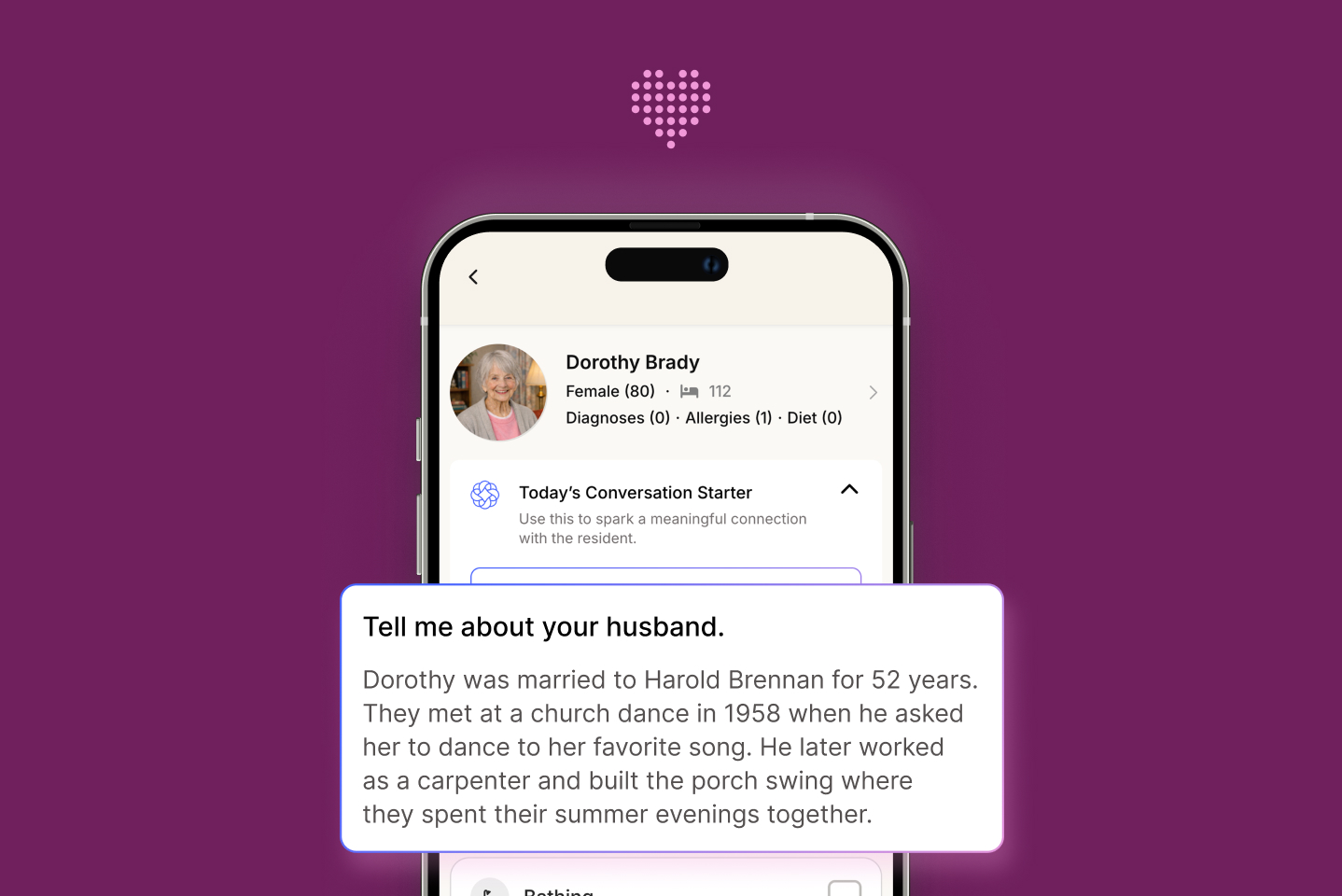
To date, more than 127,000 service plans have been created in August Health. And today, we’re making that process even better.
While watching care teams create those plans, we noticed a pattern. Usually, after completing a thorough assessment, staff has to start all over with the service plan — re-entering information already documented, recalling interventions from memory, hoping nothing critical gets skipped.
When service planning requires that kind of arduous documentation, the details that make care feel personal are the first things to get lost.
Intelligent Service Plans is designed to close that gap, so staff can spend less time reconstructing documentation and more time on the work that actually drives person-centered care.
How it works
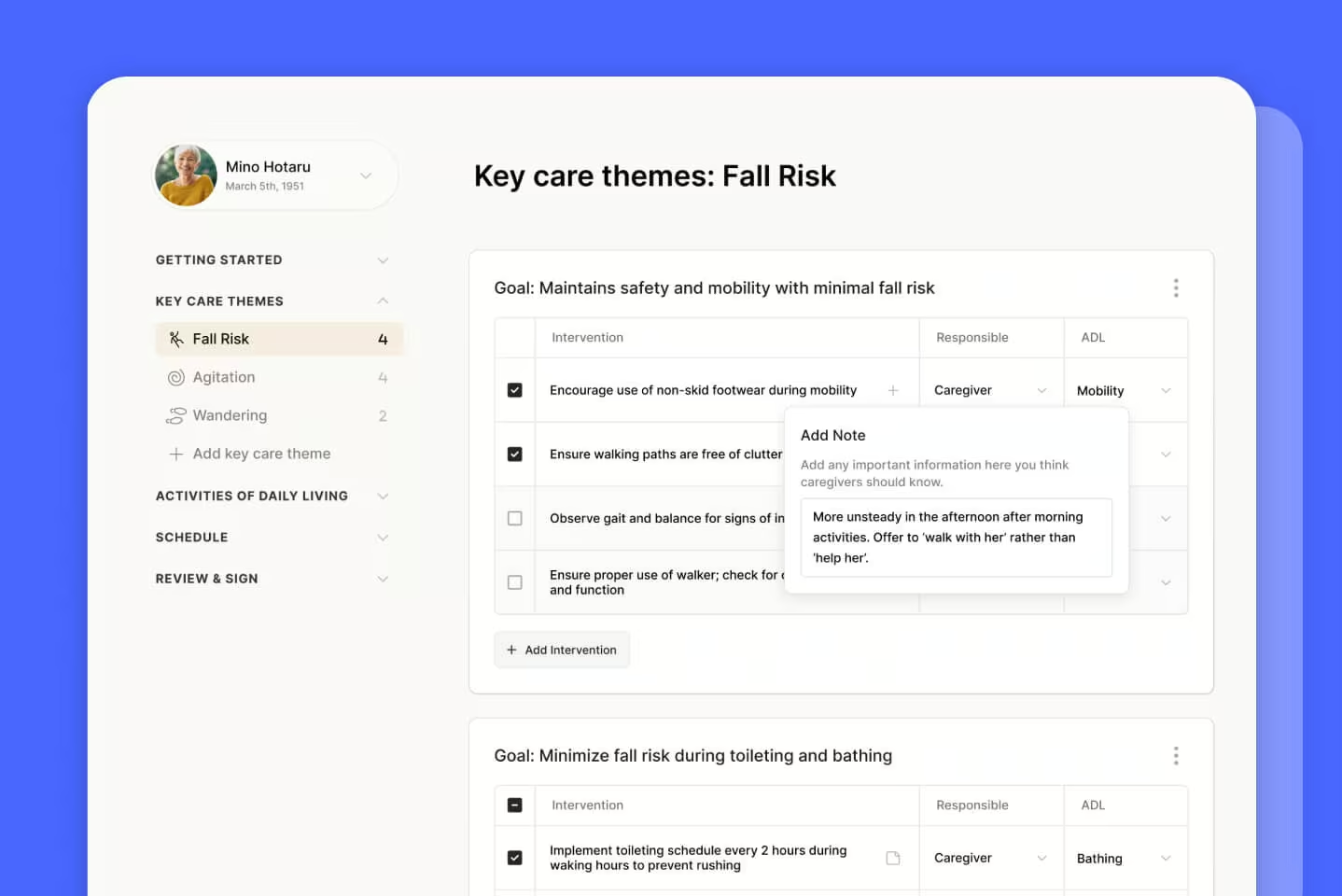
Intelligent Service Plans connects assessment findings directly to a community's custom intervention library, automatically surfacing interventions, frequencies, and responsible parties based on their evidence-based protocols. The result is a service plan that has all the clinical baselines, instead of starting from scratch.
The intervention library isn't a generic set of templates applied uniformly across every community. During implementation, communities work with the August Health team to build a library that reflects their specific care protocols, ADL standards, and state documentation requirements. It also takes into account high-risk conditions such as falls, surfacing interventions the community has already defined as appropriate — connected to the right responsible party and frequency.
In practice, service planning in August Health can be completed in just four steps:
- Staff completes the resident assessment as they normally would.
- The system generates a draft service plan from those findings, without requiring re-entry of assessment data.
- Staff review the draft and add personal details: preferences, habits, the specifics that make care feel known rather than routine.
- Once finalized, services can be scheduled directly from the plan, flowing into the Care Tab or Care Track.
The goal is to streamline what's standard so your teams can focus more on the personal touches that make residents feel at home.
A few practical notes
For teams evaluating or rolling out the feature:
- Plans can be exported as PDFs for in-person review and signature, or shared electronically for e-signature.
- High-risk conditions have targeted protocols that surface automatically based on assessment findings, ensuring nothing gets overlooked.
- Staff retains full control throughout: nothing goes into effect without review, and non-standard or custom interventions can be added directly within any individual plan.
The technology handles what repetitive manual processes do poorly. Your team still owns the process — including the personalization that makes each plan meaningful.
What to look for in any care planning tool
Whether you're evaluating August Health or another platform, these questions are worth asking:
- Does the platform require duplicate data entry between the assessment and the service plan?
- Does it support your community's specific care standards and intervention protocols?
- Does it surface high-risk condition documentation automatically?
- Does it make state compliance documentation easier, or harder?
- Does it create space for staff to add personalization, or does it treat the plan as done once the clinical fields are filled?