Last year, I published an article describing our early approach to embedding AI deeply into our products at August Health. We call this Contextual AI.
Since then, we’ve built deeply into this thesis, while scaling our ambition and philosophy on technology’s potential to have tremendous impact on how caregiving works in our industry.
In the last few months, we’ve shipped a growing number of contextualized features that can be summed up in one word: magic. We are connecting the dots (and the dataset) in a way that would not have been possible even 12 months ago. Our latest prototypes in this vein continue to push this concept even further in a way that fundamentally changes the role of an EHR in senior living.
A second AI-led approach is also starting to evolve. When we think about our product, the default is to consider the end-user: the med-tech, the caregiver, the executive director. But the power of the EHR is that, especially when it’s easy to use, it is the primary, unrivaled dataset for our industry. And across the operation, there are teams who don’t live in the EHR day-to-day, but for whom the data therein is critical to understanding and managing a modern organization. Given they are outside the core product, this audience needs tools, that are by definition, not contextual.
So, what’s the right interface here? It’s still not a chat. Chat is amazing, but it’s still fundamentally pull, not push. Our evolving approach here is one that’s inherently proactive, and leverages always-running intelligence to surface insights continuously. In this way, we leapfrog the AI 1.0 idea (allowing you to chat with your data). Well defined, always-on, and tasteful are how we think about Continuous AI.
Contextual AI in Action
The basic idea of in-context AI is simple to explain and simultaneously very hard to implement. It is providing "the right information, to the right user, at the right time and in the right place in their workflow".
It’s easiest to understand by seeing what we’ve released so far:
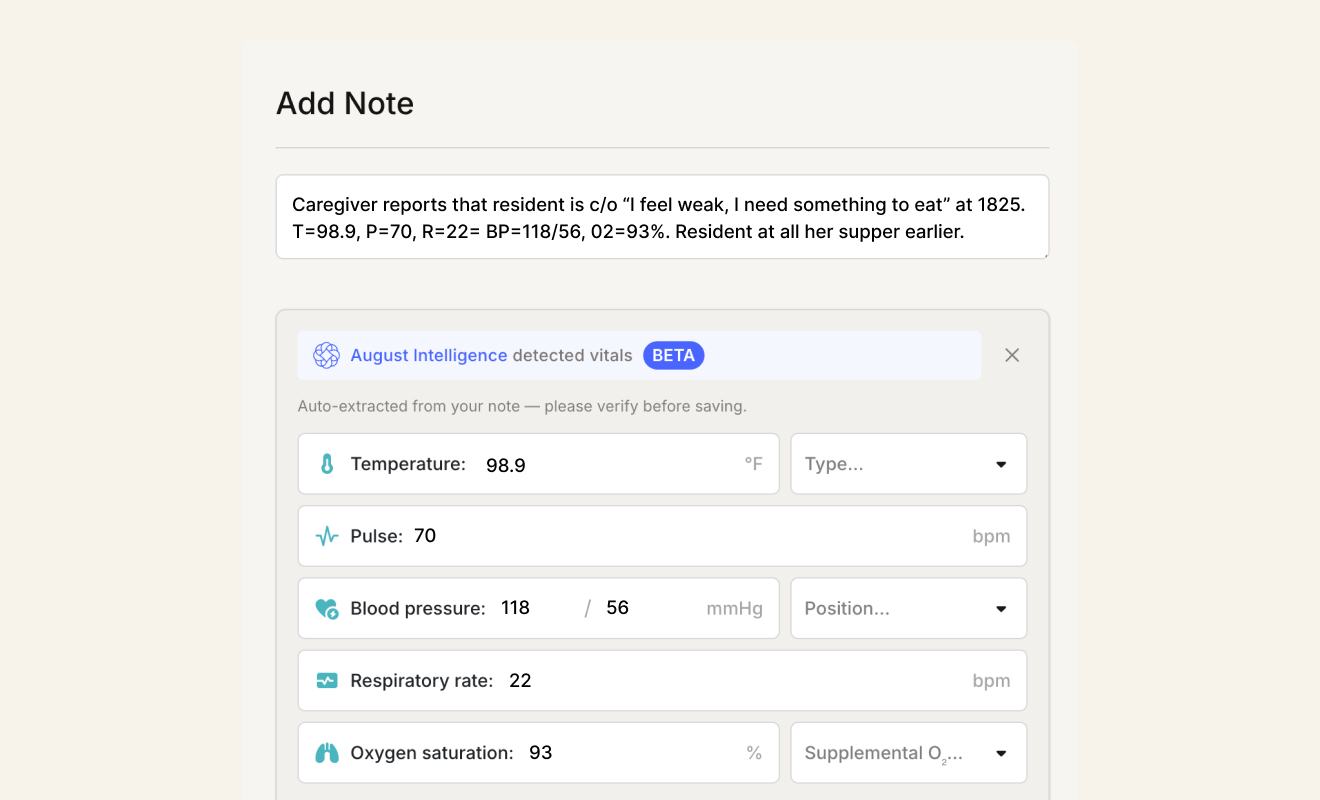
Intelligent Vitals: Captures vital readings included in a chart note or comment as data points the clinical team can use to monitor trends and guide the resident’s care plan.
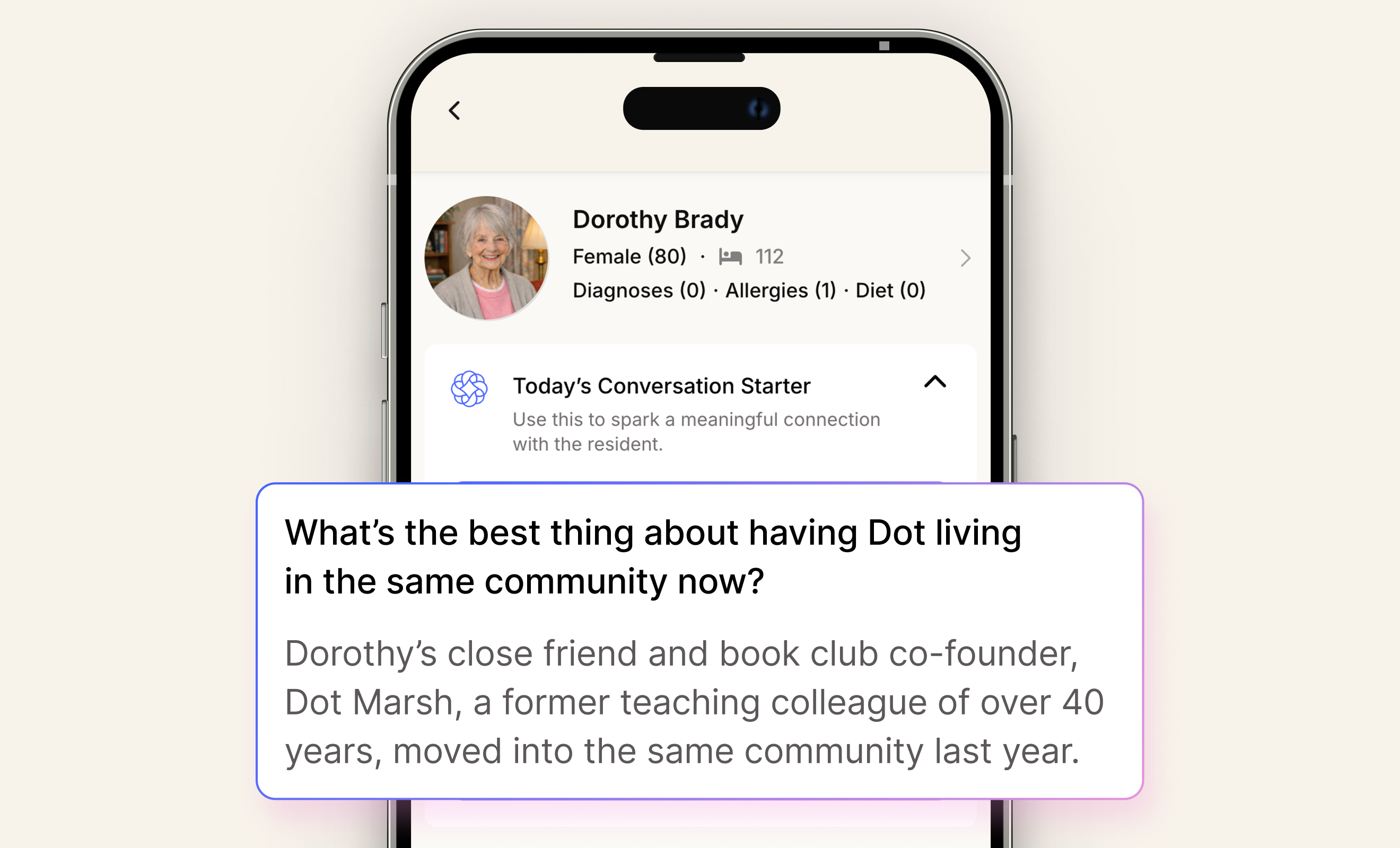
Conversation Starters: Provides personalized questions to caregivers at every shift that are grounded in what the community knows about each resident, so caregivers always have something real to connect on, right when they need it.
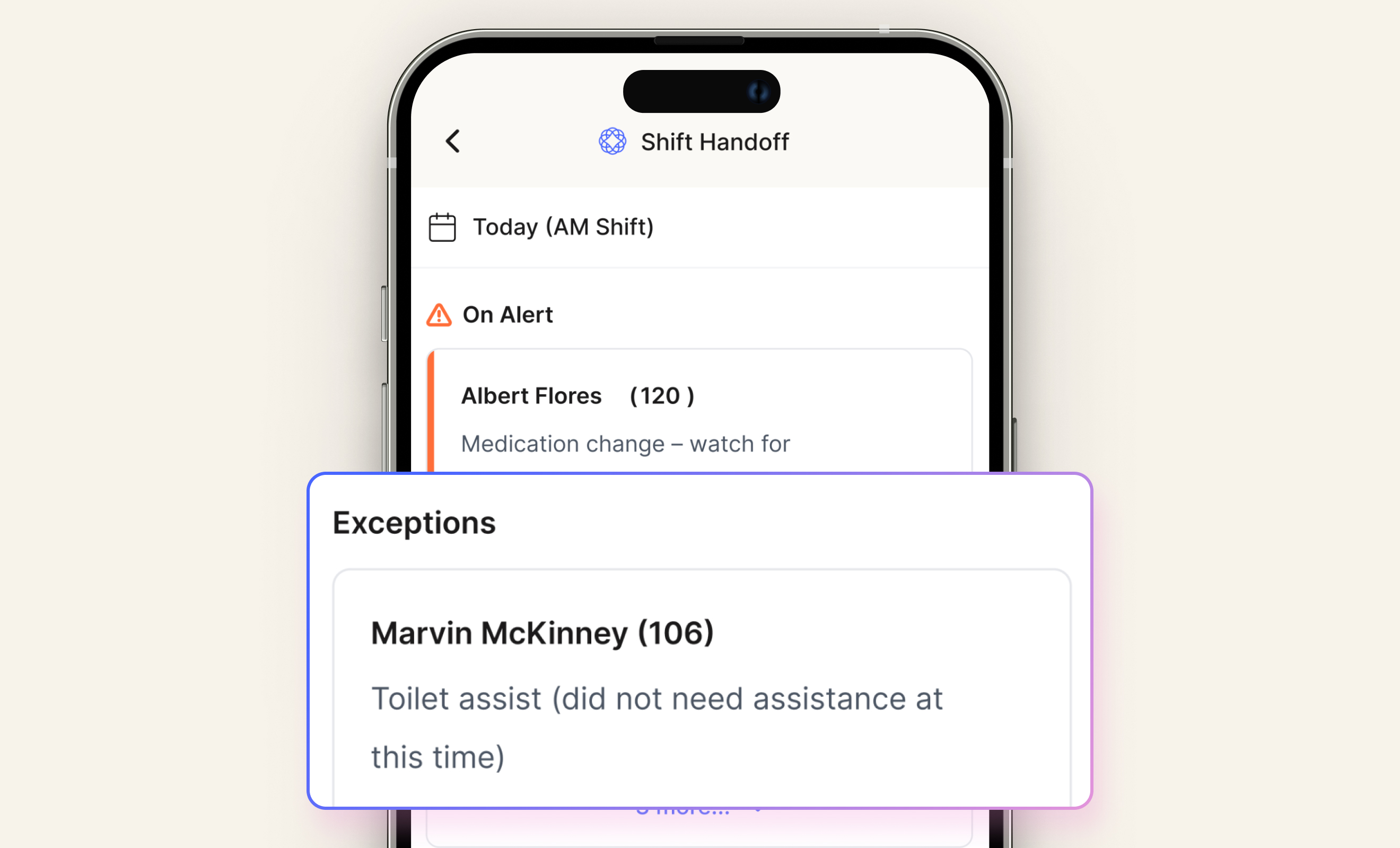
Shift-handoff: Compiles care details captured during the previous shift into a concise digital summary, so caregiving teams walk into every transition informed and ready to deliver the best care possible.
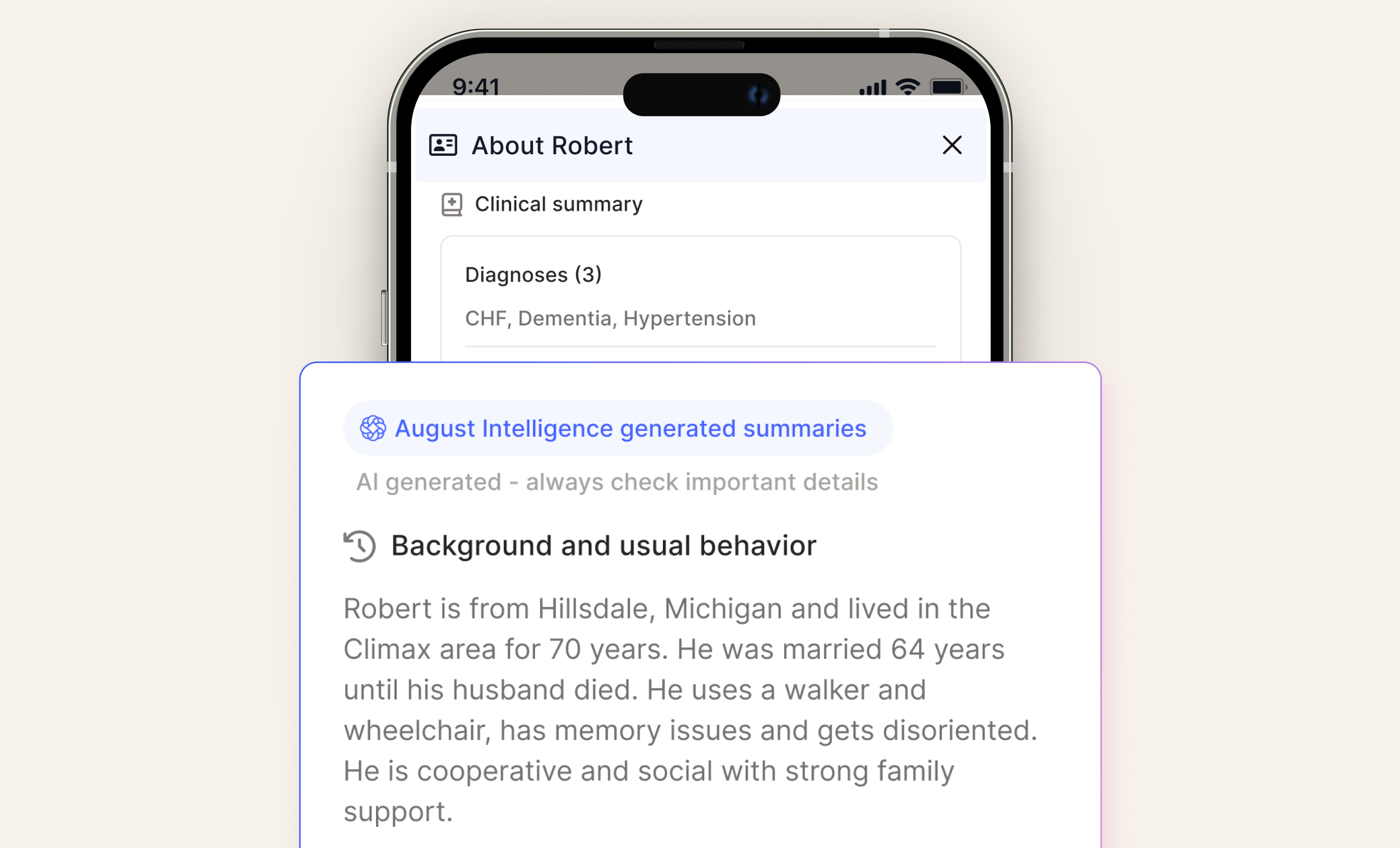
Resident Summaries: Gives caregivers an AI-generated profile of every resident at the point of care, built from the data the community is already capturing in the August Health EHR.
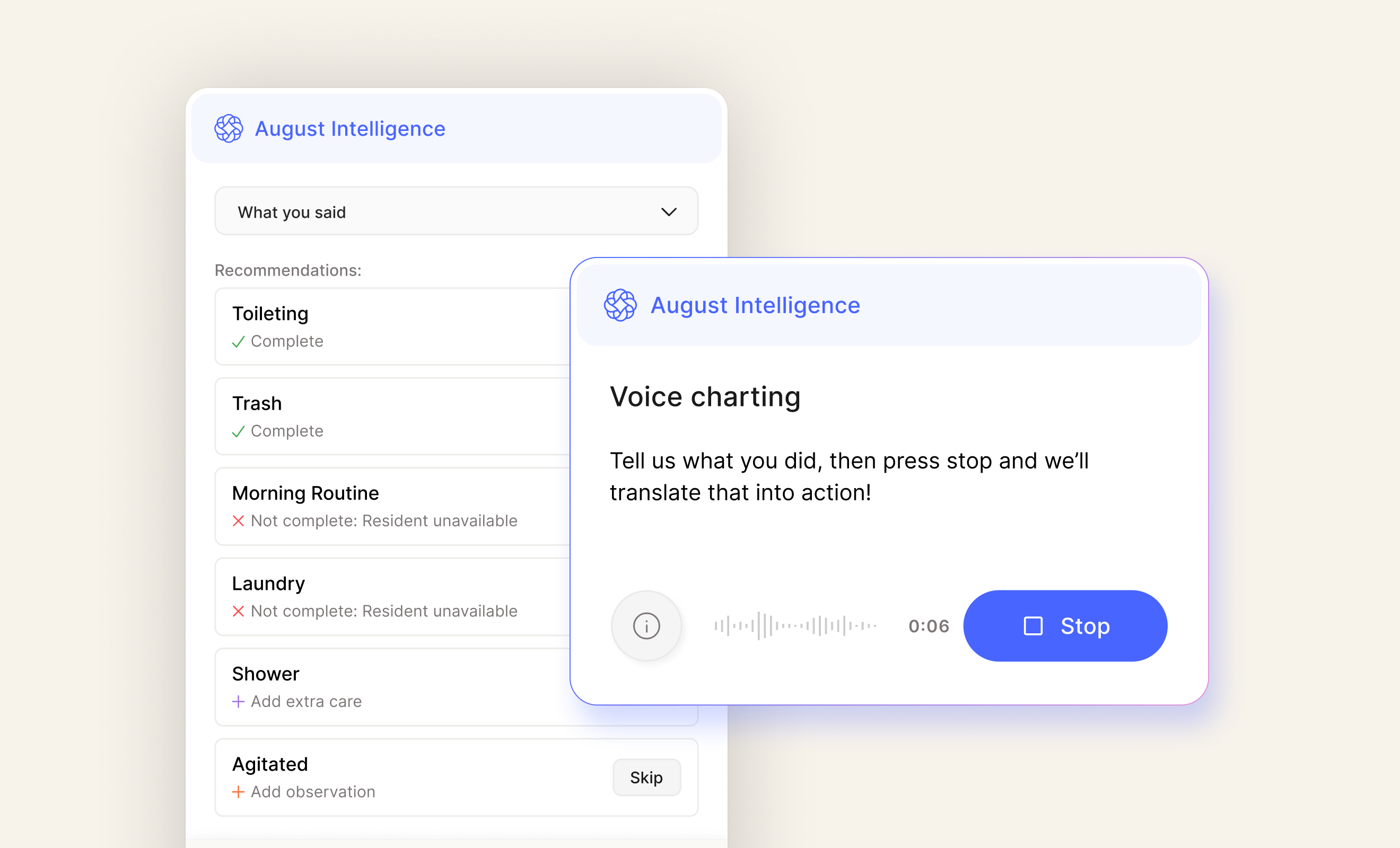
Voice Charting: Charting that turns a caregiver's voice into structured, documented care — in any language.
The power of these features is in their augmentation and creation of the dataset. Simplifying the workflow of generating resident data kills two birds: The end-user saves time, but, maybe even more importantly, this data is what drives the proactive nature of where things are going next. Because you can’t do anything cool with bad or missing data. This idea is actually the core thesis behind our entire company: By making the EHR easy to use, you’ll get better data, and in turn, that data will let you run a better operation.
Assessment Intelligence
Our latest example of Contextual AI deserves its own spotlight: Assessment Intelligence starts rolling out this week.
Perhaps the most fundamental input in running a senior living operation is deeply understanding the care a resident needs. Today, this is captured through a point-in-time assessment: a multiple-choice questionnaire that covers the various daily needs of the resident (ADLs). The hard part isn’t completing the assessment itself, but keeping it up-to-date. Residents' needs change day over day, and the signals for that change are scattered. It’s in their mood, their medication patterns, how they use their e-call, visitor frequency, activity attendance, and more.
Assessment Intelligence solves this challenge in two ways: it uses the signals to dynamically trigger reassessments, and distills them so each assessment is as accurate as possible.
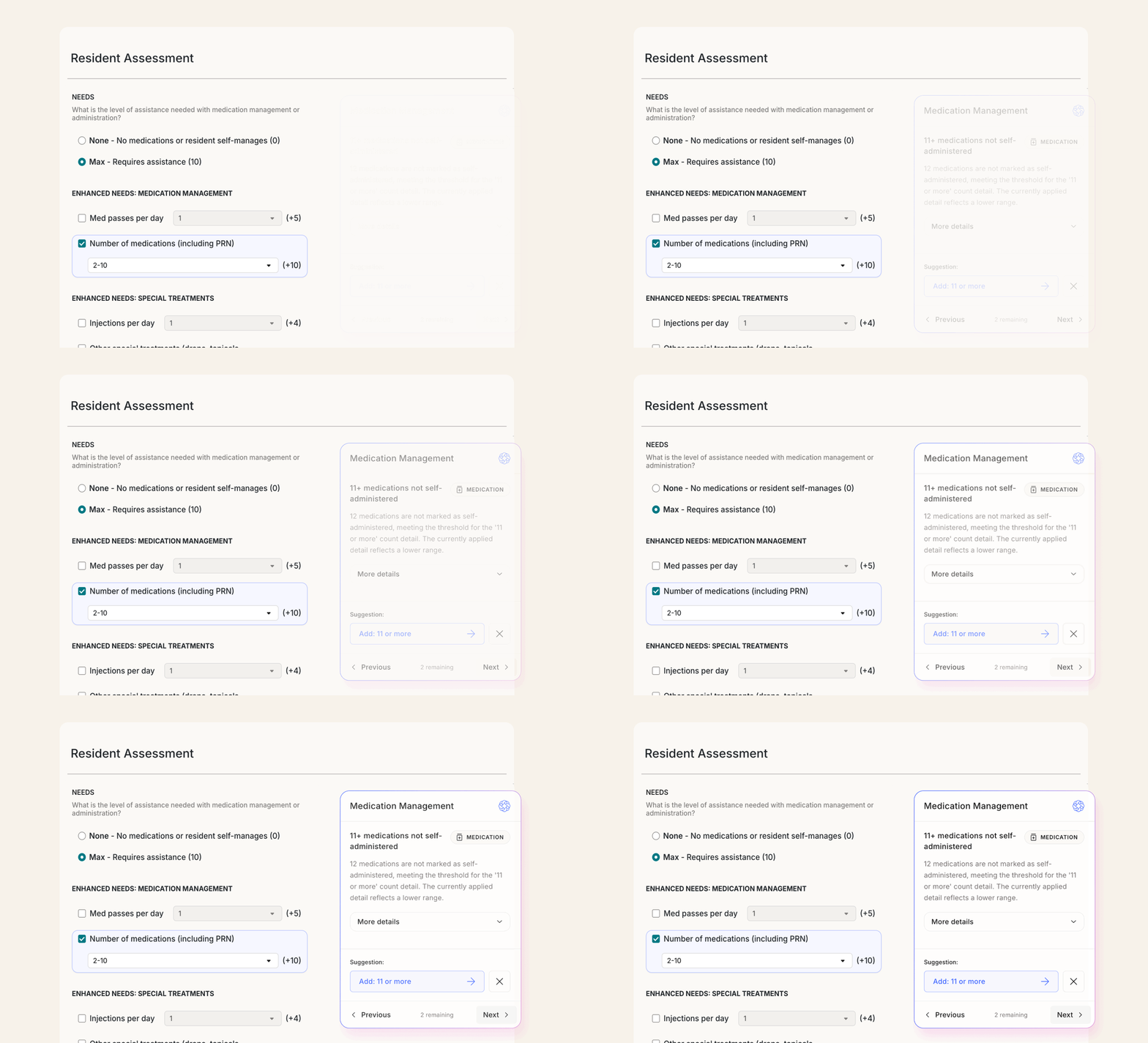
This is one of the most powerful capabilities we can offer operators today: reducing the gap between assessed and needed care. It will drive better resident outcomes, right-size staffing, and support accurate care capture. Assessment Intelligence still depends on the expert judgment of caregivers and clinical leads in the communities - its suggestions will enable better human decision-making.
Contextual AI Builds the Foundation for Continuous AI
By improving workflows and simplifying documentation at the point of care, Contextual AI improves the overall dataset, which lays groundwork for Continuous AI to run on more accurate information.
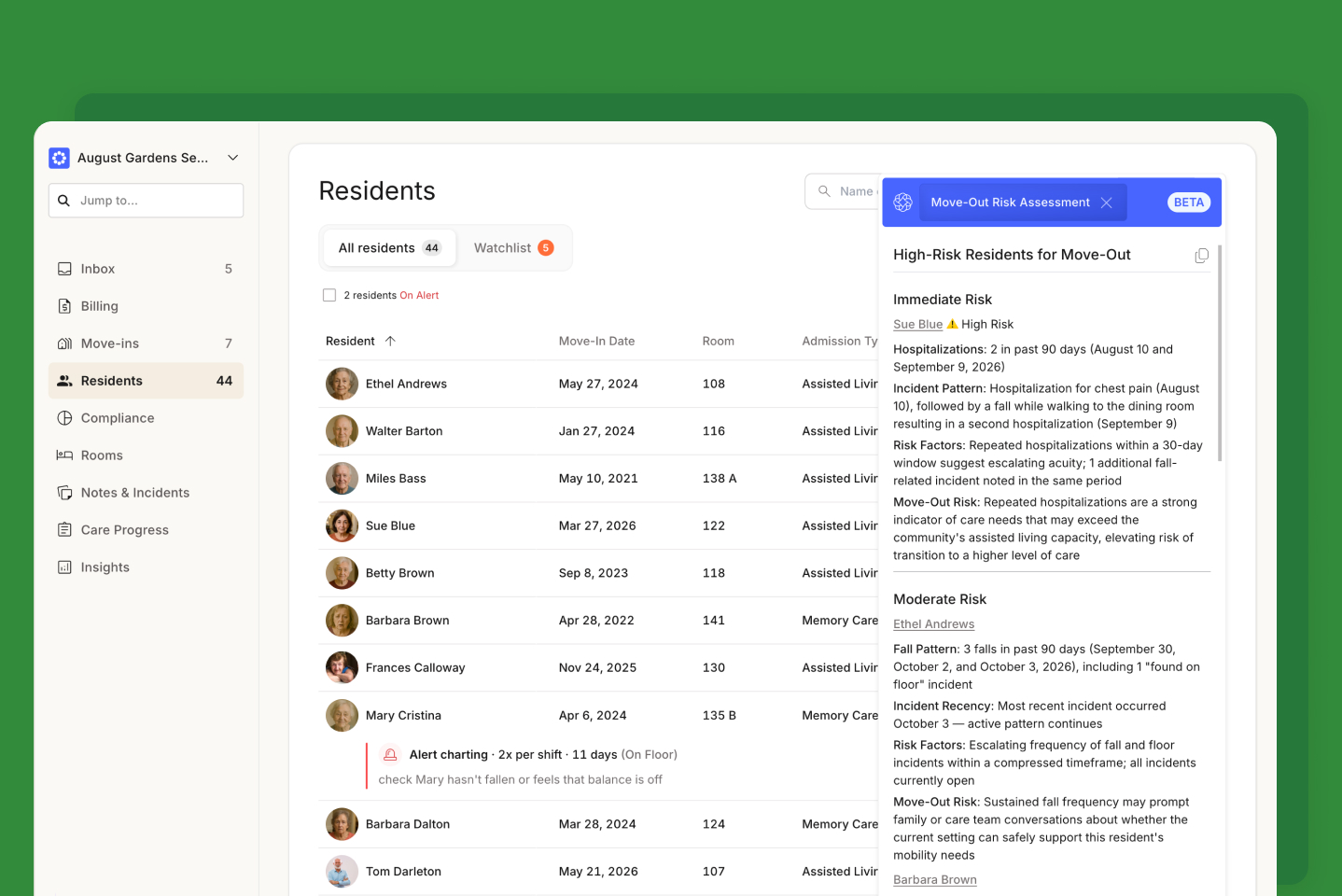
Whereas Contextual AI surfaces information into a workflow a person is already in, Continuous AI serves a different altitude of work: the people overseeing clinical strategy, operations, or finance as regional or corporate leaders. It draws on a reliable, real-time dataset from the community floors, which is exactly what makes it useful for those at Corporate or in the C-Suite. Questions are asked of the data constantly, and insights are surfaced ahead of the need, shaped for a specific person or role. These are agents running in the background, scanning for what matters.
Senior living leaders have an abundance of dashboards today, but the reality is that too many places to hunt for information actually makes operating harder. We’ve heard this described as overwhelming dashboard fatigue. The key behind this approach, which wouldn’t have been possible even last year, is that we’re elevating users beyond charts and tables towards identifying the few things that actually matter that morning.
Let’s see an example of how Continuous AI looks in our internal August Intelligence Labs environment:
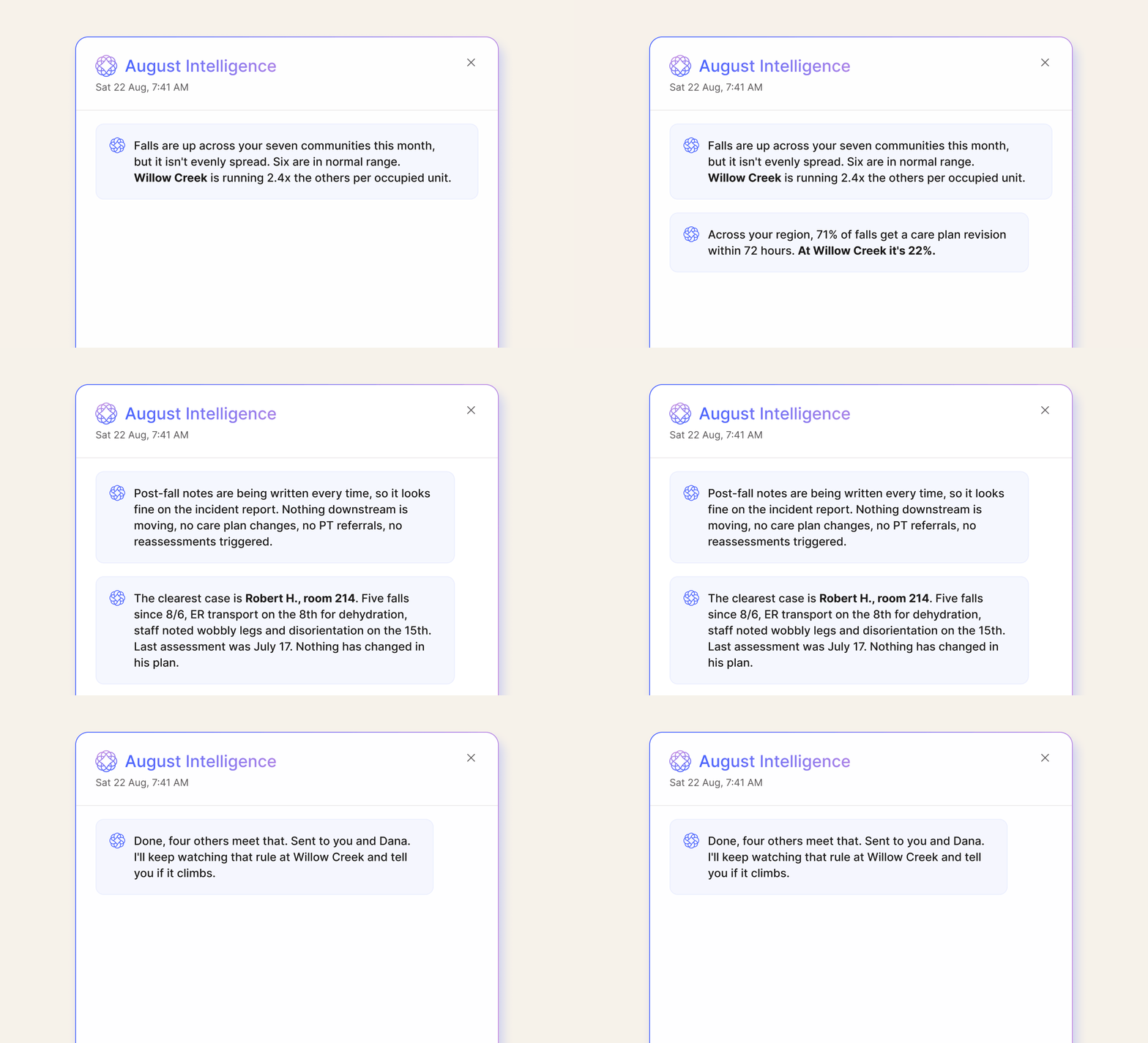
For leaders covering dozens of communities and thousands of residents and staff, this is how we augment their expertise without adding headcount or another dashboard. Continuous AI is how a lean regional team can support a growing portfolio while still paying attention to the right priorities and providing the guidance communities need.
We are beginning early pilots of Continuous AI in the coming weeks. If you’re interested in getting on the waitlist to try it, contact us here.
What’s Next
This work is changing the narrative around the challenges of operating senior living communities, and enabling realities where exceptional, personalized resident care, and sustainable business operations co-exist without compromise.
The EHR has always been a record, in that it tells you what happened. What we're building tells you what to do about it, while still empowering individuals to make the decisions. That's a fundamental repositioning of the EHR, and it's what the next decade of senior living operations gets built on.
It's still early, but better tools are available now. The best positioned operators are those who embrace tools that make the in-community routines simpler and the corporate insight sharper, and who understand those are the same investment.
I have the privilege of spending time with smart, thoughtful operators across the industry. We’ve been discussing these topics in private forums and piloting our latest work through August Intelligence Labs. If you'd like to participate or chat more about this future, please reach out here.
--
This article was originally published on LinkedIn.